
Picture this: you’re sitting at the bar with your friends the night before your solo cruise kicks off. Tomorrow morning, you’re walking onto a floating city of 5,000 strangers where you don’t know a single soul, so you’re soaking up some actual human interaction while you still can.
Then, right at 9:30 PM, your phone buzzes.
Your friends take one look at your face and ask, “What’s wrong?”
You don’t even have words. You just silently slide the phone across the table.
One of them stares at the screen, looks up, and deadpans, “Didn’t this happen to you last year too?”
You just nod, still in absolute shock, knowing full well your suitcase is currently stuffed with shorts and tropical shirts, and you now have to drive home, unpack, and trade your beach gear for pants and a hoodie because you’re heading straight to Canada.
Last year, I was watching the Atlantic weather like an anxious air traffic controller because of a hurricane creeping up the coast, so I sort of saw the writing on the wall. This year? Not a single hurricane in sight. The Atlantic looked as peaceful as a Sunday morning. Figuring I had zero to worry about, I didn’t track a thing.
Clearly, Mother Nature didn’t care about my lack of spreadsheets.
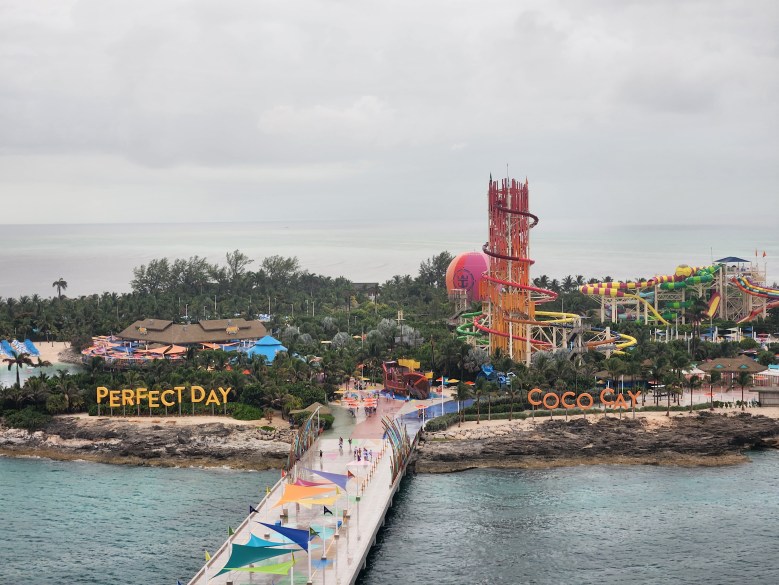
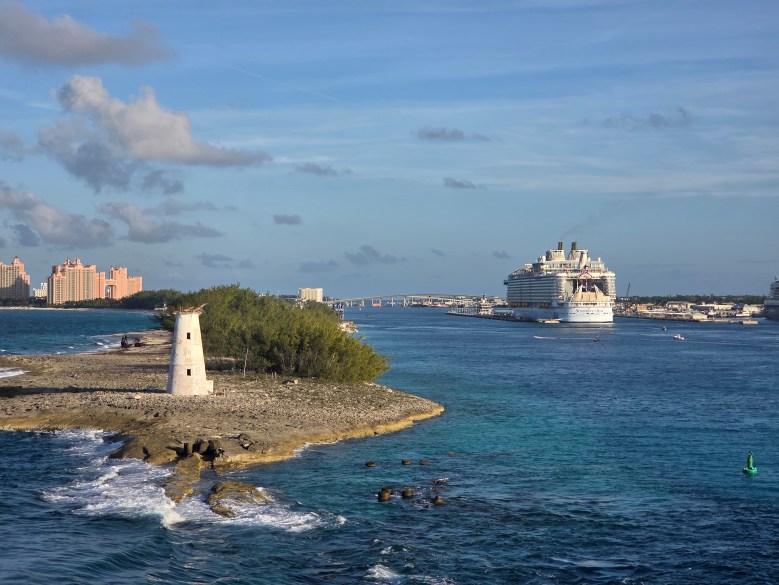
Here is what actually happens behind the scenes when a 7-day Bahamas cruise gets abruptly yanked north, from late-night packing panic to the wild evolution of an unexpected overnight port call in Nova Scotia.
1. The Pre-Departure Pivot: From Flip-Flops to Hoodies
Saying a hasty goodbye to your friends at the bar because your vacation just legally pivoted to the Great White North is a unique kind of pre-cruise bonding.
Living only about an hour away from Cape Liberty, New Jersey, is usually the ultimate cheat code for cruising. When that 9:30 PM text and subsequent email hit, I must’ve read it five times over, staring at every single line from top to bottom just to make sure my eyes weren’t playing tricks on me.
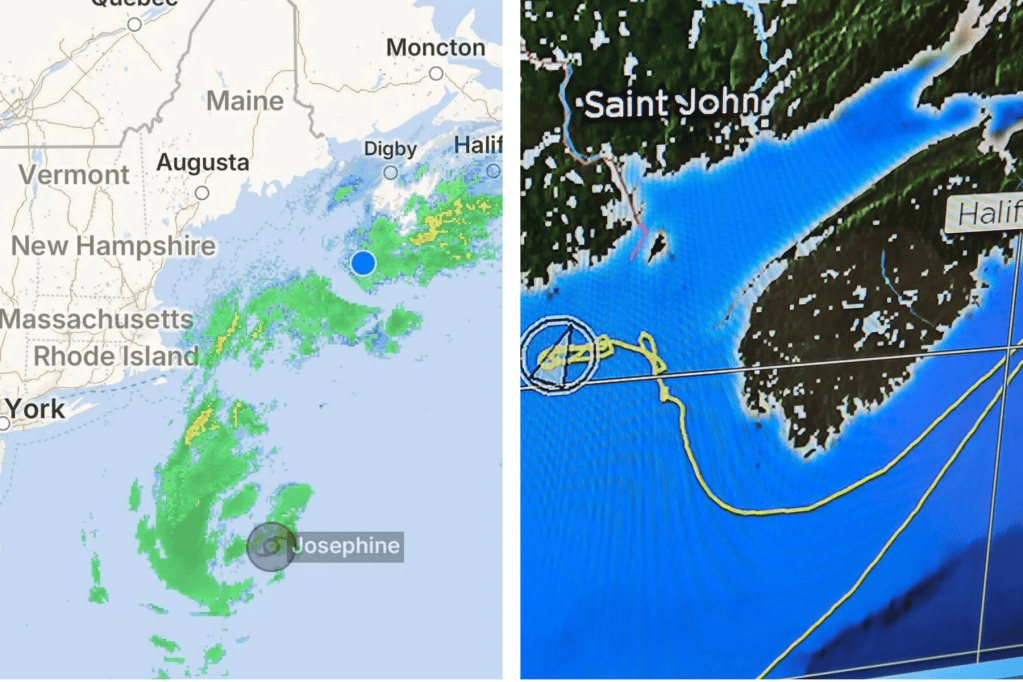
Naturally, the very next stop was the Facebook cruise group to see how the rest of the passenger base was collectively losing their minds. The feed was absolute chaos. Half the group was already on the phone with customer service canceling for a full refund, while the hardcore sun-chasers were frantically booking one-way flights down to Florida that night just to hop on a different ship leaving out of Miami or Port Canaveral.
As for me? I didn’t want a refund, and I certainly wasn’t about to drop hundreds of dollars on a last-minute flight south to chase a beach. My logistical nightmare was much simpler: drive home, walk past my neatly packed suitcase of tropical optimism, and execute a very grumpy midnight wardrobe overhaul.
Out went the extra swim trunks, lightweight button-downs, and breezy beach shirts. In came the heavy-duty jeans, thermal long-sleeve layers, and a jacket that had no business being dragged onto a cruise ship.
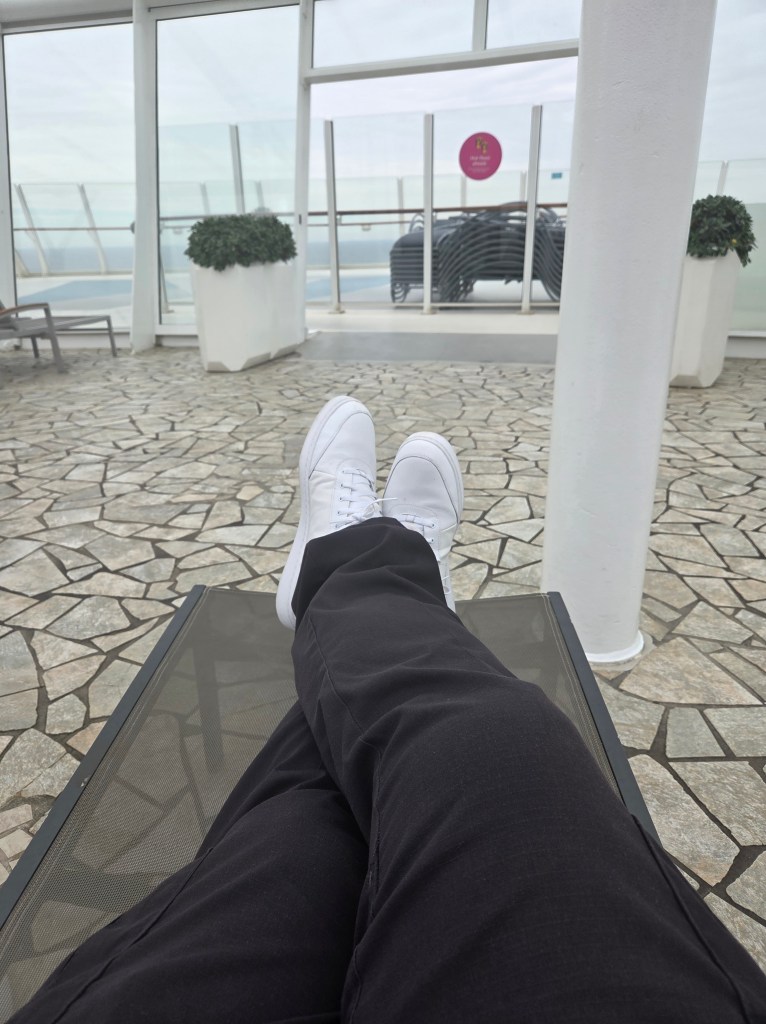
That is the hidden superpower of cruising out of a regional homeport like Bayonne when Mother Nature decides to throw a tantrum. While fly-away cruisers were stress-scrolling flight apps and arguing with customer service reps, I just unzipped my bag at my own kitchen table, swapped my flip-flops for boots, grabbed a few hours of sleep in my own bed, and rolled up to the terminal the next morning like nothing happened.
Well, except for the part where I was wearing a hoodie to board a ship originally scheduled for the Bahamas.
2. The Port Call Evolution: From Docked Ship to Actual Exploration
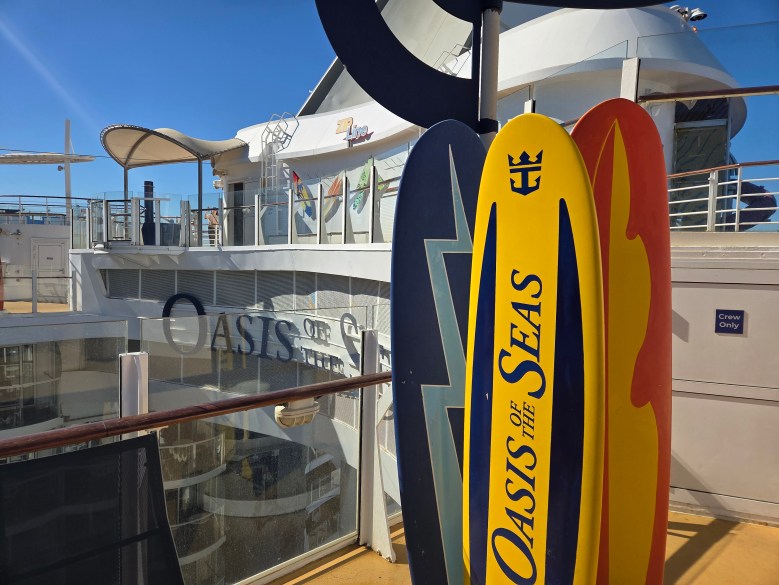
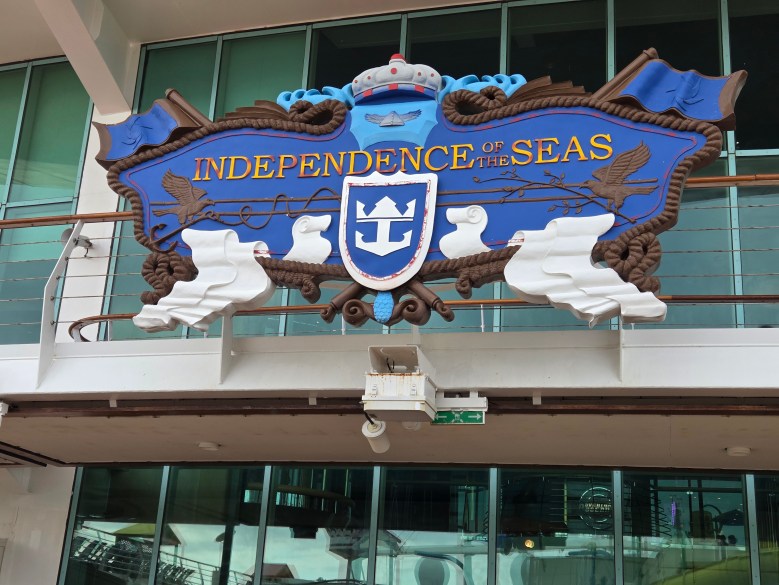
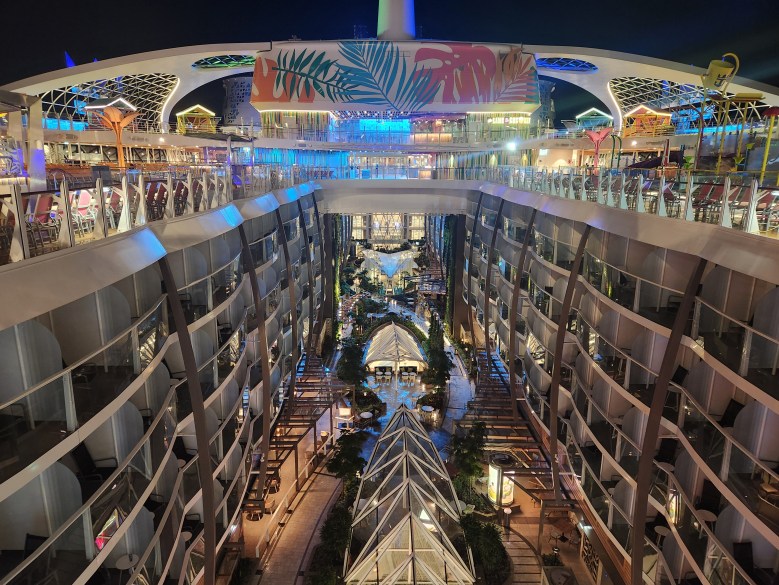
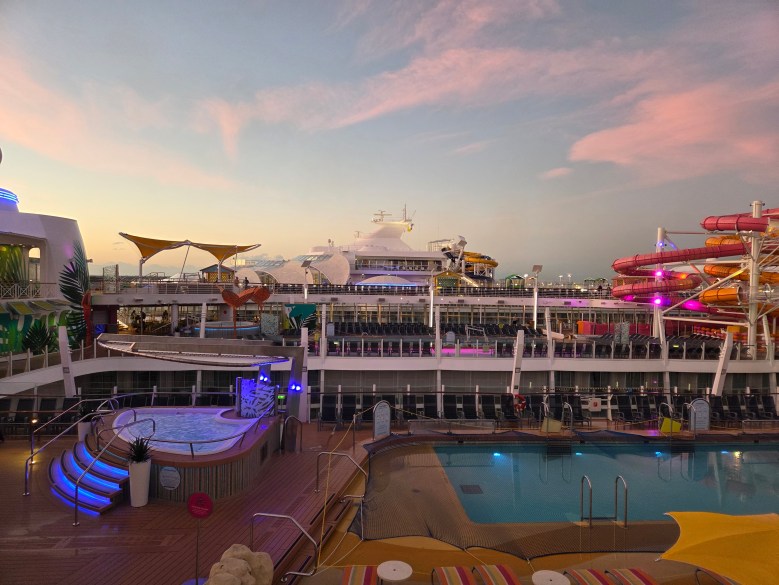
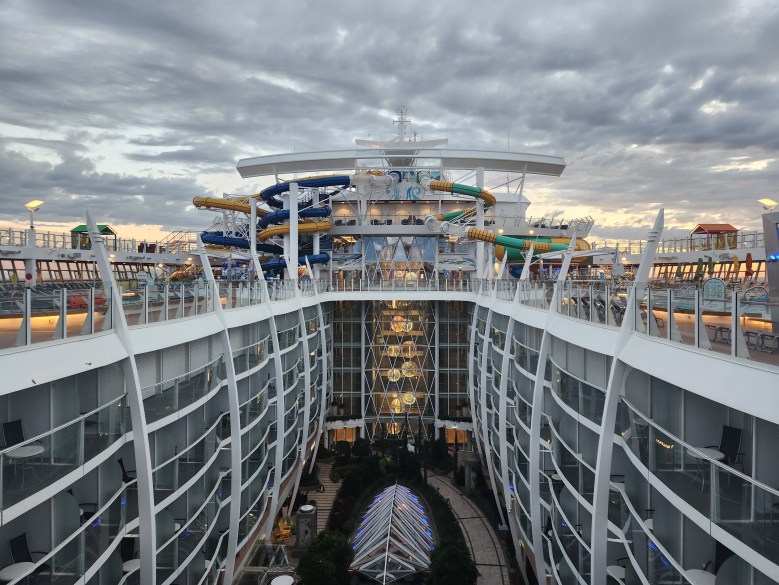
Stepping onto Oasis of the Seas on embarkation day with a suitcase full of cold-weather gear instead of swimwear set an appropriately weird tone for the week. But the real suspense wasn’t the ship itself—it was figuring out what royal decree management had cooked up for our unexpected detour north.
When we first boarded, the official word on our Halifax stop was… underwhelming.
According to the initial briefing, we would glide into Nova Scotia on Tuesday evening around 6:00 PM, tie up to the pier overnight, and shove off at 7:00 AM the next morning. The kicker? We weren’t even allowed off the ship.
Let that sink in. They were literally sailing us hundreds of miles out of our way just to use Halifax as a very expensive floating parking spot while we stared longingly at a dark, cold pier through our stateroom doors. It felt less like a cruise vacation and more like house arrest with a panoramic ocean view.
Naturally, the passenger base was thrilled. Nothing screams “vacation” quite like being docked inches from dry land while armed security guards politely explain that you can’t walk across the gangway to grab a coffee.
But then, movie magic happened.
On Monday afternoon, the Captain came over the ship-wide intercom with a plot twist nobody saw coming: our stay in Halifax was extended until 6:00 PM on Wednesday, and we were officially cleared to go ashore.
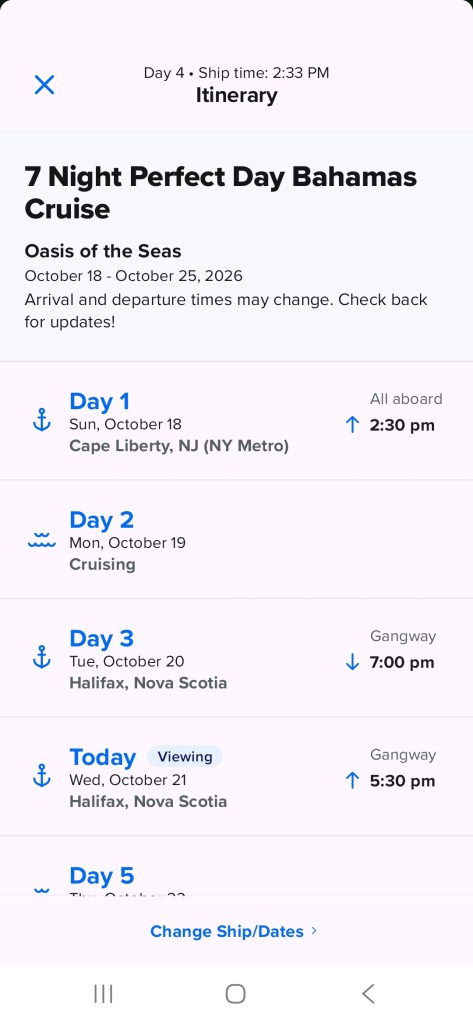
Suddenly, the entire mood on board shifted from cabin-fever grumbling to a full-scale exodus. People who spent the morning pacing the indoor decks like caged animals were instantly swarming the gangways.
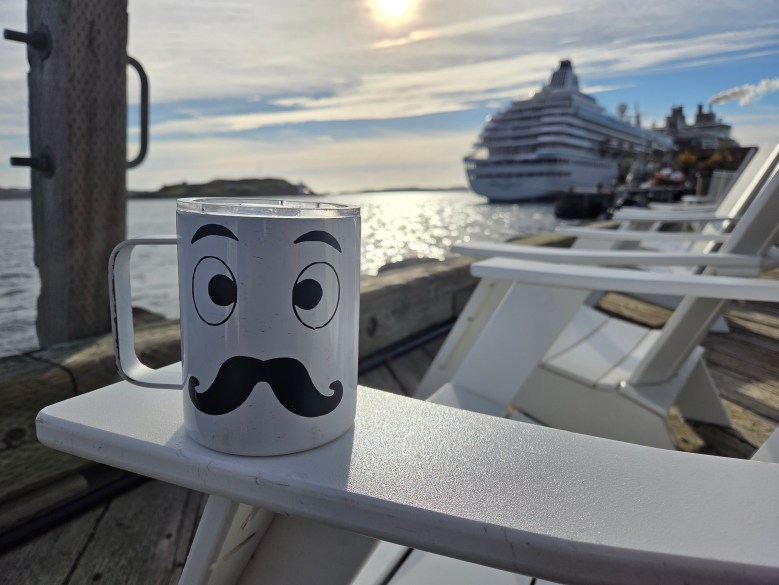
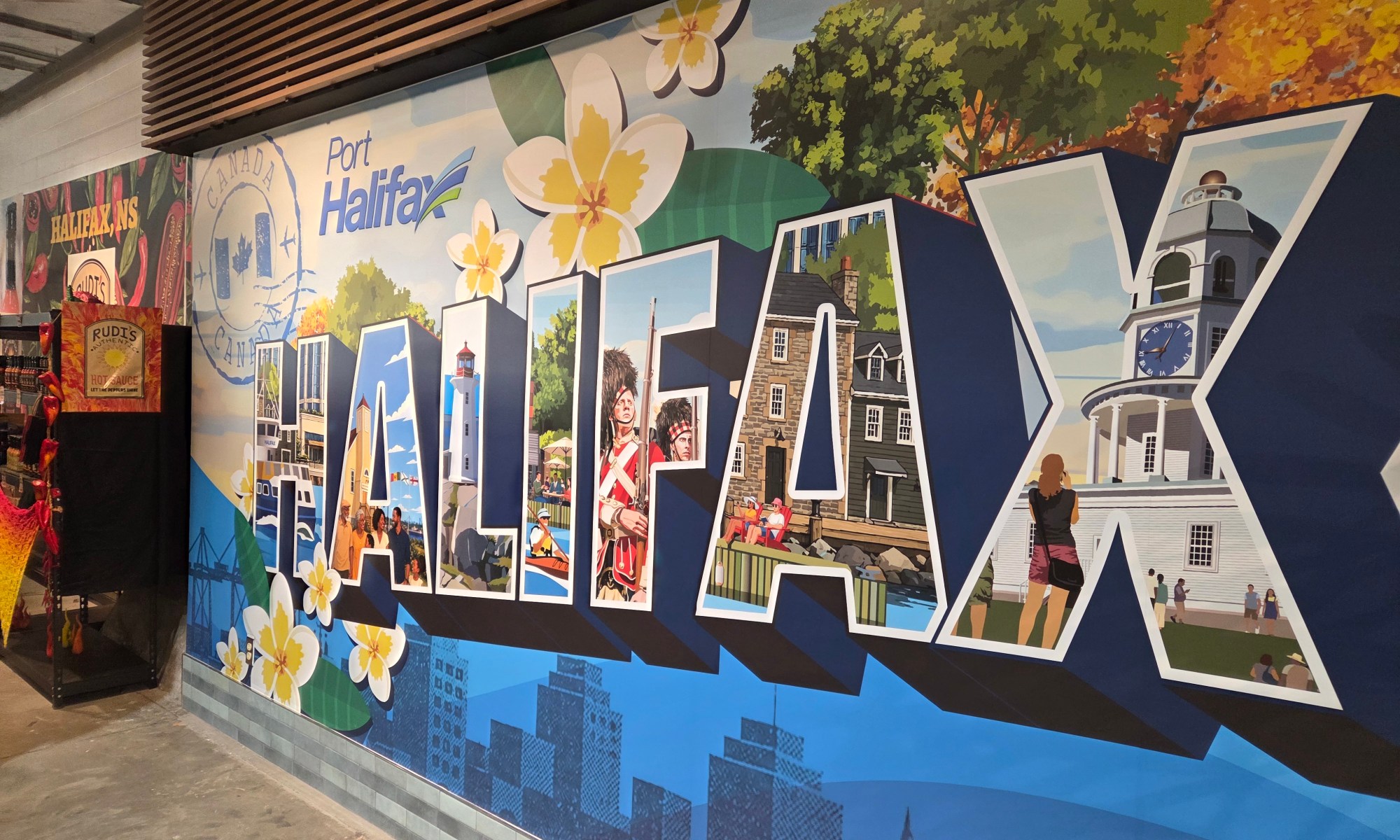
Stepping off the ship and onto the Halifax Waterfront Boardwalk changed the entire vibe of the trip. Instead of a weather penalty box, Halifax became a genuine bonus destination. Wandering the crisp streets, hitting up local pubs for a warm pint, and exploring the waterfront turned a logistical disaster into one of the best highlights of the sailing. Turns out, getting kicked out of the Bahamas isn’t so bad when Canada rolls out the red carpet.
3. The Math Behind the Diversion: Onboard Credit & Future Cruise Credits
Let’s be honest: no matter how great the Halifax waterfront is, trading pristine white-sand beaches and rum punch for chilly Canadian air requires some serious softening of the blow. Cruise lines know this, and when an itinerary gets completely flipped on its head, their wallet has to take the hit.
Royal Caribbean’s compensation package for this weather pivot wasn’t just a token gesture; it was genuinely substantial:
- Onboard Credit (OBC): Ranging from $200 per guest for interior rooms up to $600 per guest for suites.
- 50% Future Cruise Credit (FCC): A 50% credit based on the actual cruise fare paid, locked and loaded for a future sailing.
When you run the numbers as a solo traveler, the math gets real interesting, real fast.
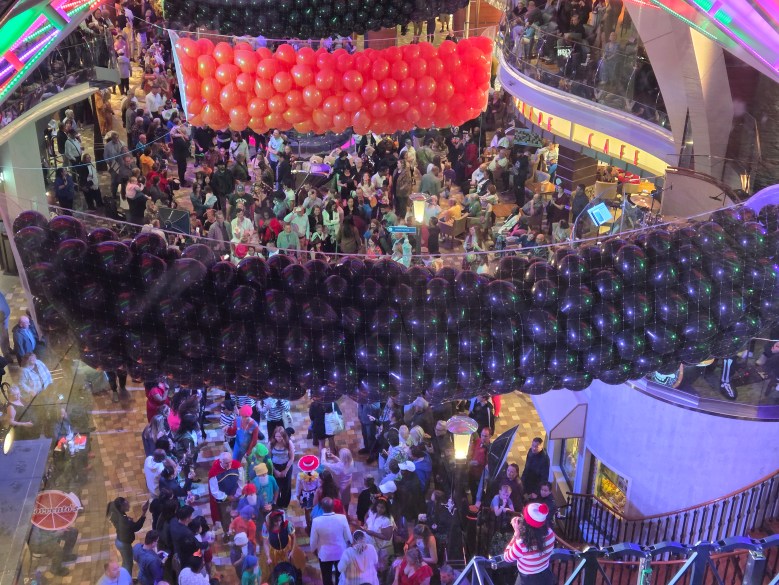
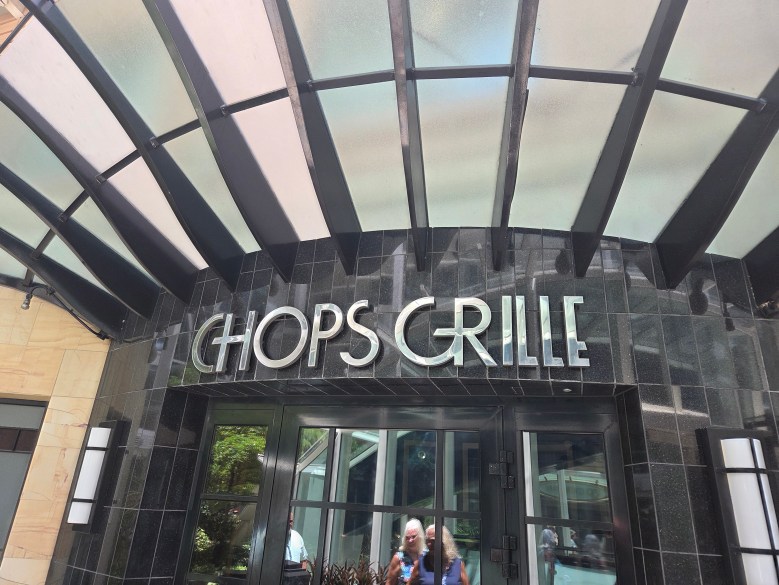
Because you’re covering the room solo, getting an automatic $200+ chunk of free onboard money is essentially a blank check to upgrade your entire week. That covers specialty dining upgrades at Chops Grille or Giovanni’s Table, a steady stream of specialty coffees, and plenty of leeway at the bars—all completely subsidized by the cruise line because Mother Nature ruined our beach days.
Then you stack the 50% Future Cruise Credit on top of that. Getting half of your cruise fare back to put toward another vacation down the line turns a forced detour into an absolute financial loophole. Essentially, Royal Caribbean paid us to go to Canada, handed over a stack of onboard cash to spend on the ship, and gave us a heavy discount on our next escape.
When weather detours pay out like a winning lottery ticket, you stop being mad at the clouds pretty quickly.
4. How the Crew Handled the Chaos: Hats Off to the Oasis Team
When an entire 5,000-passenger ship gets its itinerary nuked at the eleventh hour, the frontline staff usually bear the brunt of the passenger frustration. Guest services lines get three deep, tension spikes in the elevators, and everyone looks for someone to blame for the jet stream.
But credit where credit is due: the crew and leadership on Oasis of the Seas handled the pivot with absolute surgical precision.
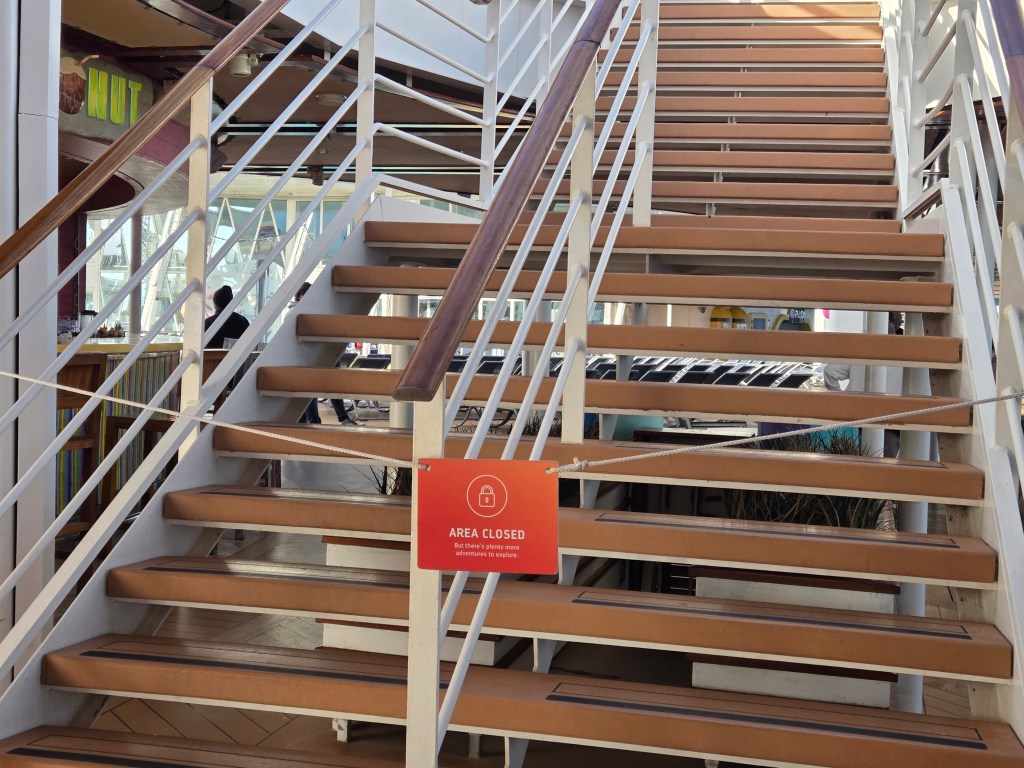
From the moment that 9:30 PM text went out, the logistical machine behind the scenes kicked into overdrive. Cruise Director staff, dining room managers, shore excursion teams, and stateroom attendants had to completely rewrite a week’s worth of programming overnight. Daily schedules (the Cruise Compass) had to be restructured, entertainment times shifted, and port logistics hastily negotiated with Canadian authorities—all while managing thousands of bewildered passengers.
What stood out most was the attitude on board. Despite the abrupt change of plans, the crew didn’t skip a beat. Service remained sharp, smiles didn’t fade, and the officers kept everyone informed as soon as new details became available.
When you’re staring down a sudden week in a colder climate than you packed for, having a crew that keeps the ship running smoothly and maintains an upbeat vibe makes all the difference. They turned what could have been a floating mutiny into a remarkably smooth, albeit chilly, adventure.
The Lightning-Strikes-Twice Takeaway
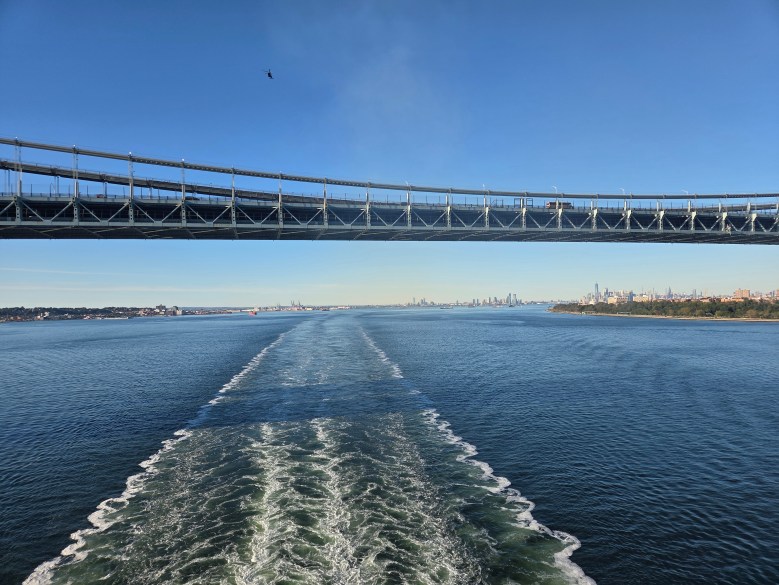
If two consecutive years of rerouted sailings out of Bayonne have taught me anything, it’s that flexibility is the ultimate solo cruising strategy. You can spend weeks color-coordinating swimwear and tracking weather apps, but Mother Nature always gets the final say.
At the end of the day, I traded palm trees for a crisp Canadian waterfront, score-settling wind on the top deck, and a suitcase full of unworn shorts. But in exchange? I got a killer overnight in Halifax, an onboard bar tab completely wiped out by cruise line credit, and half my money back to go roll the dice on another sailing down the line.
If getting “marooned” in Canada is the worst thing that happens on a solo getaway, I’ll happily take the curveball every single time. I earned 14 points for this sailing, and 16 points away from Diamond, and I am closer to getting Prime in the Casino for 2027. Time off from work and a cruise. Sounds like a Win-Win to me.