
There’s a brief, electric moment every autumn across Pennsylvania when the air turns crisp, the mountain ridges light up in brilliant shades of crimson and gold, and the entire state feels like an open-air art gallery.
Thanks to Pennsylvania’s massive state park system, dramatic topography, and incredible variety of tree species, the Keystone State boasts one of the longest and most vibrant fall foliage seasons in the entire country. From the deep timberlands of the PA Wilds down to the rolling hills of the river valleys, peak color shifts across the state for over a full month—giving photographers and road-trippers an incredible window to capture autumn at its absolute best.
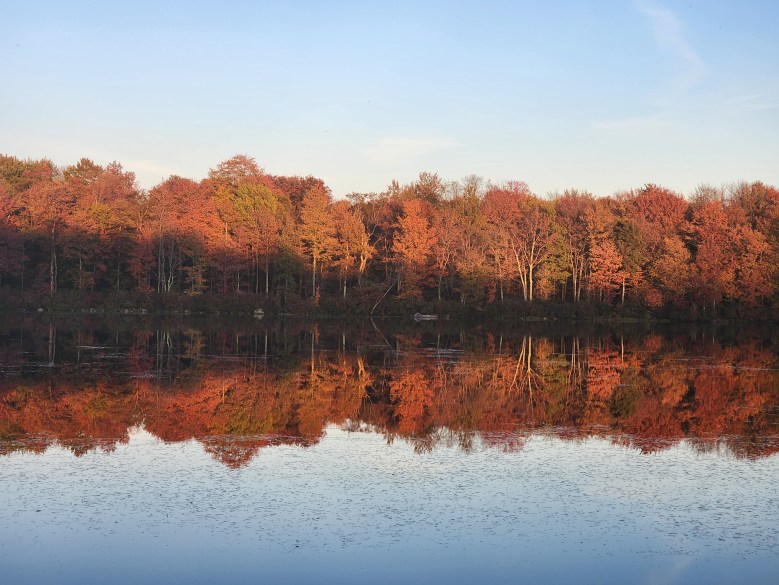
Whether you’re standing on the rim of a sweeping gorge, watching morning mist roll off a mirror-still lake, or framing an ancient steel viaduct against a canopy of orange and red, Pennsylvania offers endless inspiration for landscape photography.
In this guide, we’re breaking down four of the absolute best spots in PA to shoot peak autumn color, exact timing for your visit, and the essential photography gear and composition tricks you need to make those leaf colors pop off the screen. Grab your camera, pack a lens cloth, and let’s hit the road!
This post may contain affiliate links. It is at no extra cost to you for clicking a link, but helps me out. For more info click here.
1. Pine Creek Gorge: Capturing the Grand Canyon of Pennsylvania
Stretching over 47 miles and plunging nearly 1,450 feet at its deepest point, Pine Creek Gorge—affectionately known as the Grand Canyon of Pennsylvania—is one of the most awe-inspiring natural landmarks in the East. Carved through the Appalachian Plateau in Tioga County, this massive canyon transforms into an explosion of fiery red maples, deep yellow birches, and golden oaks during autumn.
Because the canyon walls feature distinct microclimates, trees along the upper rim often turn color days before those down along the creek floor, giving you a rich, multi-tiered gradient of fall foliage to shoot.
Must-Visit Viewpoints for Photographers
A. Leonard Harrison State Park (East Rim)
- Best Time to Shoot: Early Morning (Sunrise to 10:00 AM)
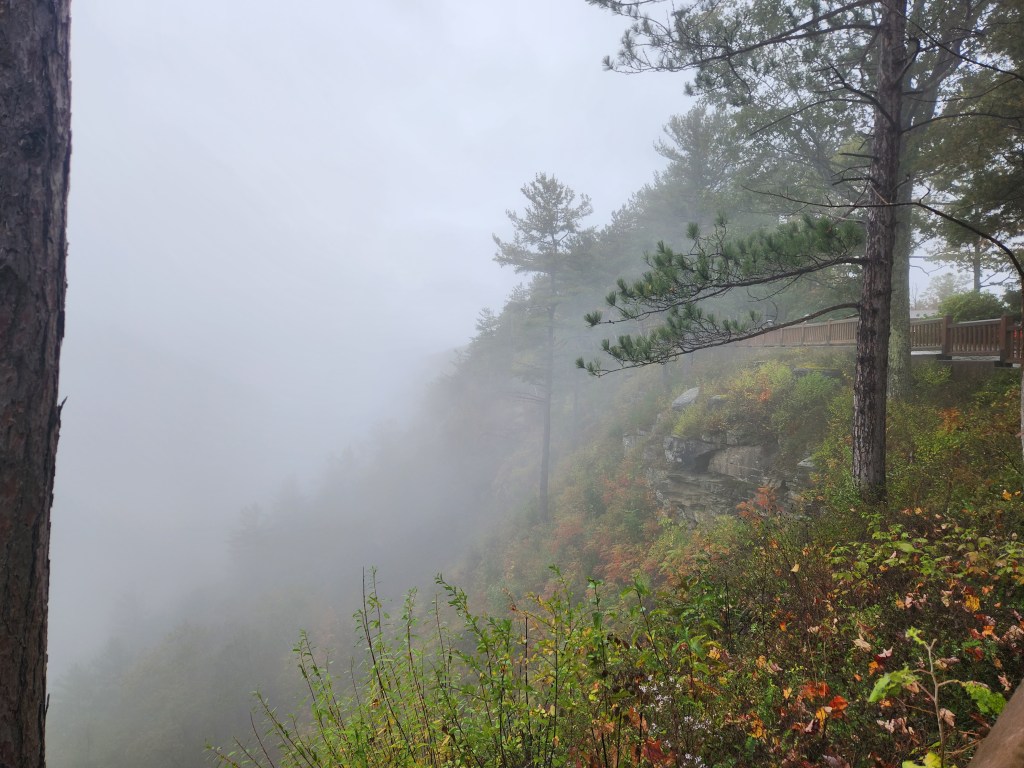
- The View: Located on the eastern side of the gorge, Leonard Harrison provides the classic, high-elevation panorama overlooking the winding creek far below.
- Photo Strategy: Position your tripod near the main overlook right as the sun breaches the horizon. In early autumn, cool morning temperatures often trap thick fog in the bottom of the gorge. Shoot wide to frame the sun burning through inversion fog, revealing bright red treetops sticking out above the cloud layer.
B. Colton Point State Park (West Rim)
- Best Time to Shoot: Late Afternoon & Golden Hour
- The View: Directly across the gorge sits Colton Point, offering a wilder, more rugged atmosphere with fewer crowds. The trails along the rim lead to several stone overlooks built by the Civilian Conservation Corps (CCC).
- Photo Strategy: As the sun begins to sink in the west, warm golden light illuminates the eastern canyon walls across the gorge. Use a medium telephoto zoom (70–200mm) to isolate geometric patterns in the colorful canopy on the opposing cliff faces.

C. The Pine Creek Rail Trail (Valley Floor)
- Best Time to Shoot: Mid-Day / Overcast Light
- The View: Don’t limit yourself to the top of the rim. Driving down into the canyon or riding a section of the Rail Trail puts you right along the creek’s edge beneath an arching canopy of yellow leaves.
- Photo Strategy: Use low-angle perspectives looking up along the gravel trail or stream bank. The tall canyon walls shade the valley floor, creating soft, even lighting that prevents harsh glare on wet leaves and water reflections.
2. Kinzua Bridge State Park: Industrial History Meets Autumn Color
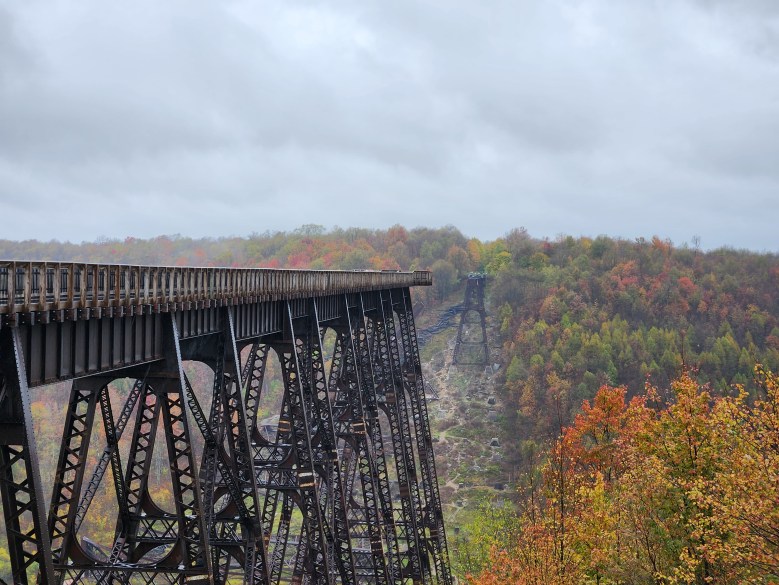
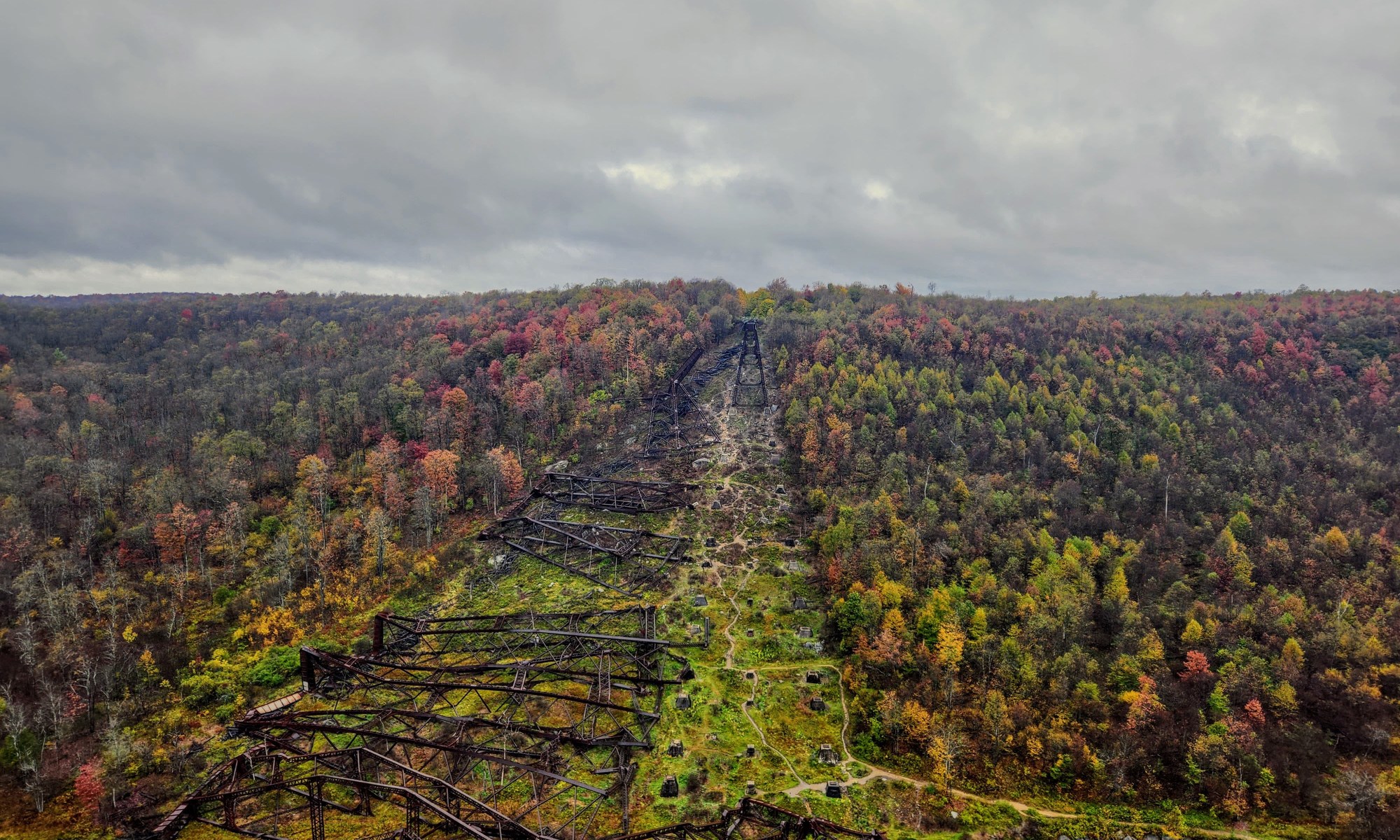
Located in McKean County, Kinzua Bridge State Park offers one of the most striking visual contrasts in all of Pennsylvania: massive steel infrastructure rising directly out of an endless sea of hardwood forest.
Once the longest and highest railroad viaduct in the world, a portion of the original 1882 bridge was torn down by a tornado in 2003. Today, the remaining 600 feet of historic steel structure has been transformed into the Kinzua Skywalk, a pedestrian walkway featuring a glass floor panel that extends out over the Kinzua Creek Valley. During early October, this entire valley transforms into an ocean of brilliant gold, crimson, and copper foliage.
Must-Visit Vantage Points for Photographers
A. The Kinzua Skywalk Platform
- Best Time to Shoot: Early Morning or Golden Hour
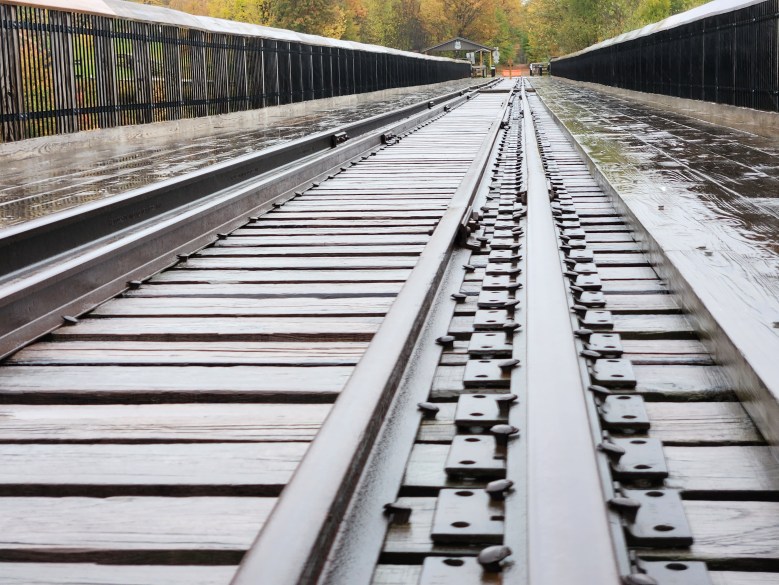
- The View: Walking 225 feet out above the valley floor places you directly above the tree canopy, offering a true 360-degree panorama of the forested hillsides.
- Photo Strategy: Use a wide-angle lens (14–24mm) to capture the perspective of the steel tracks leading out toward the skywalk edge, framed by the vivid autumn valley stretching to the horizon. Shoot straight down through the partial glass floor panel to capture the forest floor below for a dramatic, dizzying vertical perspective.
B. The Trail to the Valley Floor (General Kane Trail Connection)
- Best Time to Shoot: Late Morning to Early Afternoon
- The View: The trail leading down into the gorge gives you a view looking up from beneath the giant steel towers and fallen support structures.
- Photo Strategy: Stand near the base of the standing towers and shoot upward at an angle. Framing the dark, rusted iron lattice against a vibrant, lit-up canopy of yellow birches and orange maples creates high-contrast, graphic compositions.

C. The Park Visitor Center Overlook
- Best Time to Shoot: Mid-to-Late Afternoon
- The View: Located near the visitor center, this paved overlook gives a full side profile of the skywalk and the twisted ruins left in the valley by the 2003 tornado.
- Photo Strategy: Use a medium telephoto lens (50mm to 85mm) to isolate the dramatic contrast between human engineering, natural destruction, and the lush seasonal regrowth of the surrounding forest.
3. Lyman Run & Cherry Springs: Mirror Lake Reflections & Dark Sky Astrophotography
Located just 15 minutes apart in the remote heart of Potter County, Lyman Run State Park and Cherry Springs State Park offer an extraordinary foliage-and-stars combo. By day, Lyman Run delivers tranquil water reflections framed by autumn ridges; by night, Cherry Springs—designated as an International Dark Sky Park—provides some of the darkest skies on the East Coast for astrophotography.
Must-Visit Vantage Points for Photographers
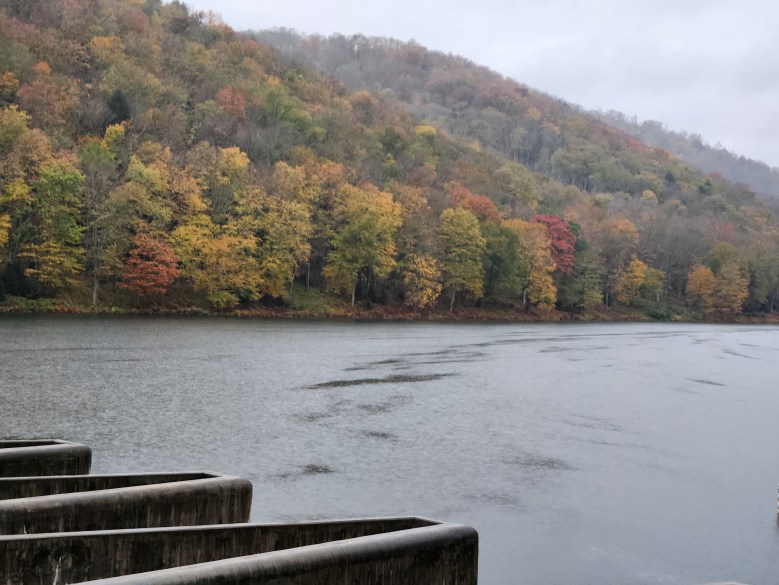
A. Lyman Run Lake (Damsite & Shoreline Overlook)
- Best Time to Shoot: Sunrise to Early Morning (6:30 AM – 9:00 AM)
- The View: The 45-acre Lyman Run Lake is completely enclosed by steep, mixed hardwood ridges dominated by sugar maples, black cherries, and birches.
- Photo Strategy: Walk across the dam breast at the western end of the lake for a full, unobstructed view down the water. On calm autumn mornings, the water acts as a perfect mirror, reflecting fiery red and gold hillsides. Set up low to the shoreline to capture water-worn rocks or fallen leaves floating in the foreground.
B. Lyman Lake Vista (Susquehannock State Forest)
- Best Time to Shoot: Mid-Afternoon to Golden Hour
- The View: A short 5-minute drive up the mountain from the park office brings you to a high-elevation roadside overlook.
- Photo Strategy: Look down over Lyman Run Lake embedded in the colorful mountain basin. Use a circular polarizer (CPL) to cut atmospheric haze across the valley and make the dense canopy pop against the blue water below.
C. Cherry Springs Astronomy Observation Field

- Best Time to Shoot: Night (1–2 Hours After Sunset to 3:00 AM)
- The View: Situated on a 2,300-foot mountain plateau, the field features a 360-degree, light-pollution-free horizon.
- Photo Strategy: Arrive while there is still ambient daylight to map out your composition and lock in foreground elements (like the tree line or telescope domes). During October, the core of the Milky Way tilts low toward the southwestern horizon right after dark, letting you align the galactic core directly over the autumn tree canopy.
4. Ricketts Glen State Park: Silk Waterfalls Framed in Ancient Forest
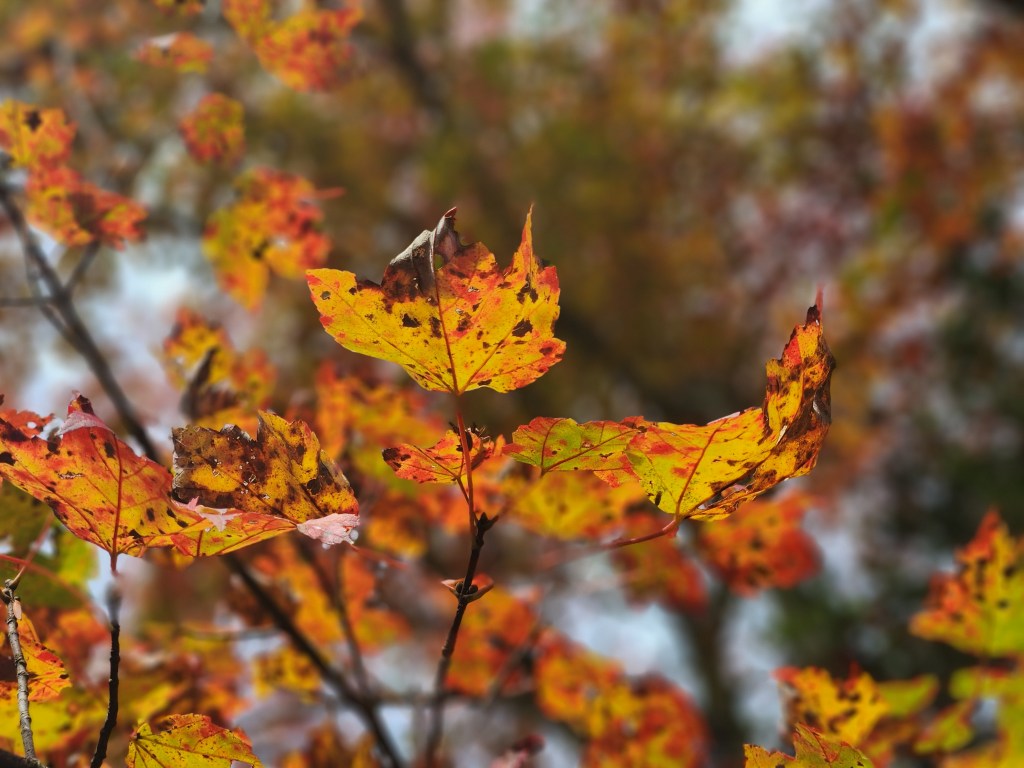
Spanning Columbia, Luzerne, and Sullivan counties, Ricketts Glen State Park is Pennsylvania’s crown jewel for autumn waterfall photography. Home to Glens Natural Area—a National Natural Landmark—the park features 21 named waterfalls tucked within a lush old-growth forest of ancient hemlocks, birches, and sugar maples.
When peak foliage arrives in mid-October, the deep rock gorges fill with rich golden light and fallen crimson leaves, creating an incredible backdrop for silky, long-exposure waterfall shots.

Top Waterfall Locations on the Falls Trail
A. Ganoga Falls (94 Feet – The Big One)
- Best Time to Shoot: Early Morning or Overcast Days
- The View: The tallest drop in the park, Ganoga plunges down a massive, tiered rock wall surrounded by moss and overhanging canopy.
- Photo Strategy: Use a wide-angle lens (16–35mm) set low to the rocky stream bed. Frame wet, orange fallen leaves in the immediate foreground while keeping the towering white water cascade central in your composition.
B. Huron Falls & Shawnee Falls (Lower Glen)
- Best Time to Shoot: Mid-Morning
- The View: These drops offer classic, multi-tiered ledge steps where water fan-outs create delicate silky trails rather than a single heavy plunge.
- Photo Strategy: Look for natural foam swirls at the base of the plunge pools. A 2 to 4 second shutter speed will turn those circular foam currents into white swirl trails on the dark water surface, framed by fallen foliage along the banks.
C. Onondaga Falls (Upper Glen)
- Best Time to Shoot: Afternoon (Deep Canopy Shade)
- The View: A shorter, 15-foot drop nestled in a tight rock amphitheater.
- Photo Strategy: Because Onondaga sits deep in the glen, it loses direct sunlight early. Use a medium focal length (35–50mm) to isolate the subtle textures of damp, dark slate, bright green moss, and bright yellow beech leaves clinging to wet rock faces.
5. Technical Photography Guide: Mastering Fall Landscapes
Capturing peak autumn colors isn’t just about showing up at the right location—it requires dialing in technical camera settings to preserve saturation, maintain sharpness, and handle dynamic light.
A good, sturdy tripod helps getting the perfect shot. Check out this one from Amazon. It works with your DSLR, Mirrorless, and even your phone.
A. Aperture & The Sharpness Sweet Spot
- The Target Aperture Range (f/8 to f/11): Most camera lenses hit peak optical sharpness within this range. It provides sufficient depth of field for sweeping vistas while avoiding optical degradation.
- The Danger of Narrow Apertures (f/16 to f/22): Avoid stopping down to f/16 or f/22 to get everything sharp. Extreme small apertures cause diffraction—light waves bend around the aperture blades, softening the entire image.
- Hyperfocal Distance Rule: Focus roughly one-third into the frame when shooting wide vistas. At $f/8$ on a wide-angle lens, this keeps both mid-ground trees and distant mountain ridges in crisp focus.
B. Circular Polarizing Filters (CPL): Maximizing Natural Saturation
A Circular Polarizer is the single most essential physical filter for fall photography because its effects cannot be replicated in post-processing.
- How It Works: Wet leaves act like thousands of tiny mirrors reflecting direct sunlight. A CPL blocks reflected polarized light waves, eliminating leaf glare and revealing the true pigment underneath.
- Sun Angle Rule (The 90-Degree Trick): Polarizers work best when your camera is pointed at a 90-degree angle to the sun.
- Light Loss: A CPL reduces light entering the lens by 1.5 to 2 stops. Always use a sturdy tripod when using a CPL, as your shutter speed will drop significantly.
C. White Balance: Locking in Warm Tones
Auto White Balance (AWB) treats vibrant orange and red foliage as a “color cast” and actively tries to cool it down with blue tones.
- Daylight Preset (5200K–5500K): Locks the camera’s color response to standard sunlight, ensuring warm maples retain their golden hues.
- Shade / Cloudy Preset (6000K–6500K): Use deep inside shaded glens or on overcast days. It adds a gentle amber warmth that makes damp forest floors pop.
D. Focus Stacking: Edge-to-Edge Sharpness
When an foreground element (like a dew-covered leaf or stream rock) sits inches from your lens, focus stacking combines multiple frames for total sharpness.
- In-Field Shooting: Mount your camera on a sturdy tripod. Set your camera to $f/8$, lock Manual White Balance, and take three bracketed focus shots:
- Frame 1: Focus on the close foreground (leaf/rock).
- Frame 2: Focus one-third into the frame (mid-ground tree line).
- Frame 3: Focus on the distant background ridge/horizon.
- Post-Processing (Photoshop): Load frames as layers (File — Scripts — Load Files into Stack), run Edit, and then select Edit Auto-Blend Layers (Stack Images) to auto-merge the sharpest pixels into a single image.
Final Thoughts & Planning Your Trip
Pennsylvania’s autumn show moves fast, but with a little planning—and by following the DCNR weekly foliage reports—you can track peak color from northern counties down through the central ridges all through October. Pack your polarizers, double-check your tripod plates, and make sure to leave these pristine state parks exactly as you found them!
Fall is my favorite time to visit PA State Parks. Every day when you wake up, the scenery is different. A tree that was barely changing the day before could be fully in color the very next morning. If you have the chance, check every few days. Otherwise, search the state park you want to visit on Instagram to see the latest photos coming from there so you don’t miss the peak.