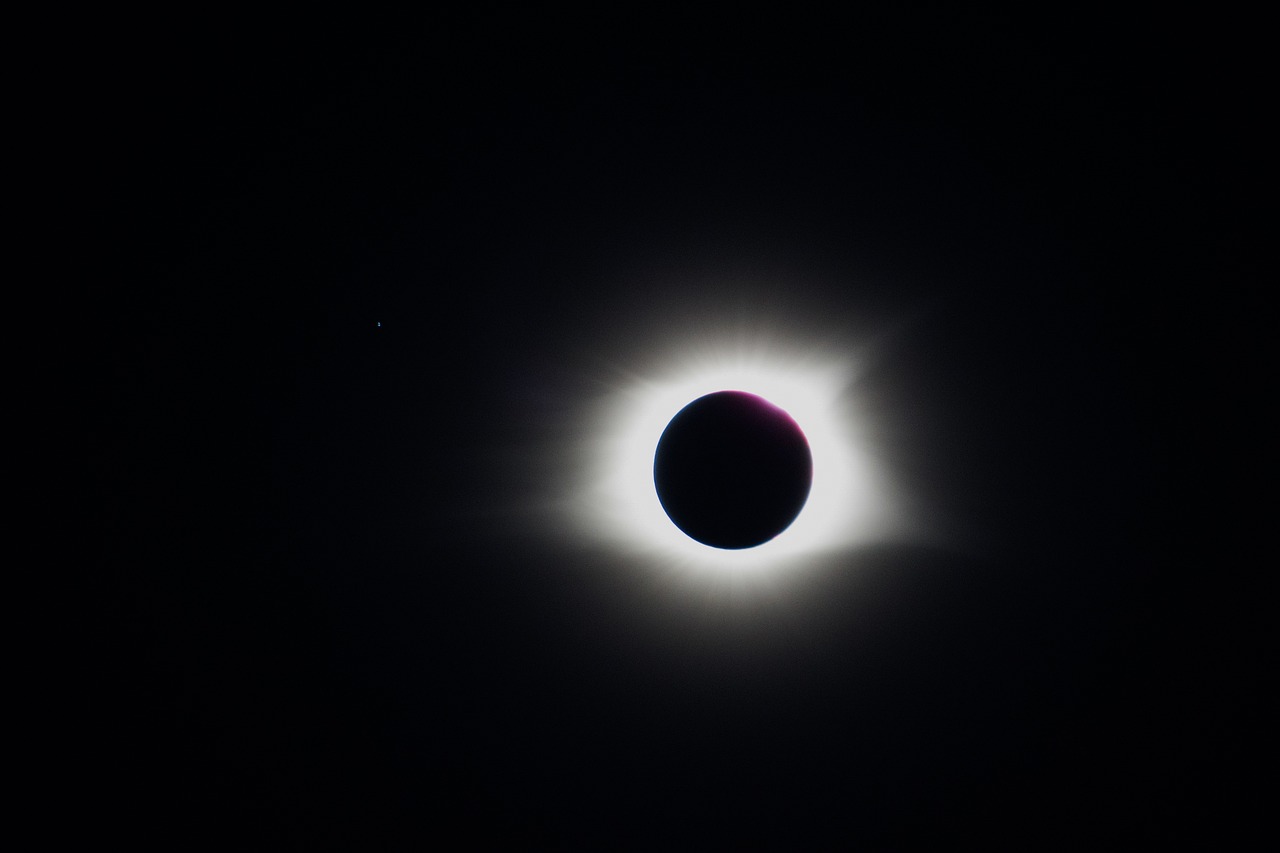

Did you know that on April 8th, 2024 a total Solar Eclipse can be seen all across the continental United States? They are calling it the Great North American Eclipse and it is sure to be a great show (as long as the weather is clear). Our next chance for a Total Solar Eclipse to cover the entire US won’t be until August 12th, 2045.
So why is this eclipse so interesting? Like we said, almost the entire US population (except Alaska) will be able to see at the very least a partial solar eclipse. Even in many parts of Hawaii, the moon will cover at least 15% of the sun’s surface. West Coast cities like Seattle (20%), Los Angeles (49%), and Las Vegas (51%) will get a decent show if the clouds hold off.
Many cities in the south east will get a good showing too. Miami (46%), Orlando (58%), Atlanta (82%), and Charlotte (80%) will see a good portion of the moon covering the sun.

Parts of Texas, Louisiana, Mississippi, Oklahoma, Arkansas, Tennessee, Kentucky, Kansas, Missouri, Illinois, Iowa, Virginia, West Virginia, Wisconsin, Michigan, Indiana, Ohio, Maryland, Pennsylvania, New Jersey, New York, Connecticut, Rhode Island, Massachusetts, Vermont, New Hampshire, and Maine will see at least 90% of the moon covering the sun. That is over half of all US States. New York City will see 90% of the moon covering the surface of the sun. Buffalo, Cleveland, Indianapolis, Little Rock, Dallas, and Austin, TX, will get to see the Total Solar Eclipse in all of its glory.
You can bet that those areas within the path of totality will be packed. If you try to book a hotel in those areas you are out of luck. If you are lucky enough to find one the prices are steep.
A Motel 6 in Buffalo NY will cost you a total of $564 for two nights (4/7 to 4/9). The Courtyard Buffalo Downtown will run you $2,057 for the same two nights according to Hotels.com.
If you check out the prices for the following Sunday to Tuesday (4/14-4/16) the same Motel 6 will cost you a total of $135. The same Courtyard hotel the following week will only cost you $474.
Good luck even trying to find open campgrounds in the area too. While it is possible, many have been booked up for months. The only good thing, many of the campgrounds didn’t jack up their prices for the event.

This post may contain affiliate links. It is at no extra cost to you for clicking a link, but helps me out. For more info click here.
Information and things to know
The eclipse will start in Texas at 12:10 pm CST and end in Maine at 4:41 pm EST. The April 8th eclipse will last for over 2 hours in most parts of the US. Those of you lucky enough to be in the center of the path of totality can witness the moon completely blocking out the sun for over 4 minutes.
Be sure to check out timeanddate.com to see when the eclipse will start in your area. There is also a good animation on their site that will show you how it will look from your location.
If you are going to travel to an area that is in the path of totality, remember to be flexible. Not only will hundreds, if not thousands of people will have the same idea. Traffic is going to be horrible and crowds will be up there too. Plus you have to pay close attention to the weather.
The event could get rained out in your preferred viewing area. You might have to drive a couple hours north or south to get a clear view. And don’t worry if it will be slightly cloudy on that day. As long as it won’t be raining or they are calling for overcast skies, you should still be able to see some of the eclipse.

I witnessed my first partial solar eclipse back in 2017. They were calling for cloudy skies but I ended up setting up my GoPro for a time lapse anyway. The final results ended up blowing me away. The video below just shows you how you can’t rely on what the weather is calling for. I still had plenty of chances to get some great shots of the partial eclipse.
I did end up doing two things wrong. First I didn’t have a solar filter or any filter on my GoPro. In the video you couldn’t even see the moon covering any of the sun. I believe nearly 90% of the sun was covered by the moon in my area. Sadly, the time lapse I shot didn’t show that. What it did show was how cloudy that day was but still ended up working out.
My second mistake was with my camera. I did use a strong ND filter but an eclipse filter would have worked out so much better.
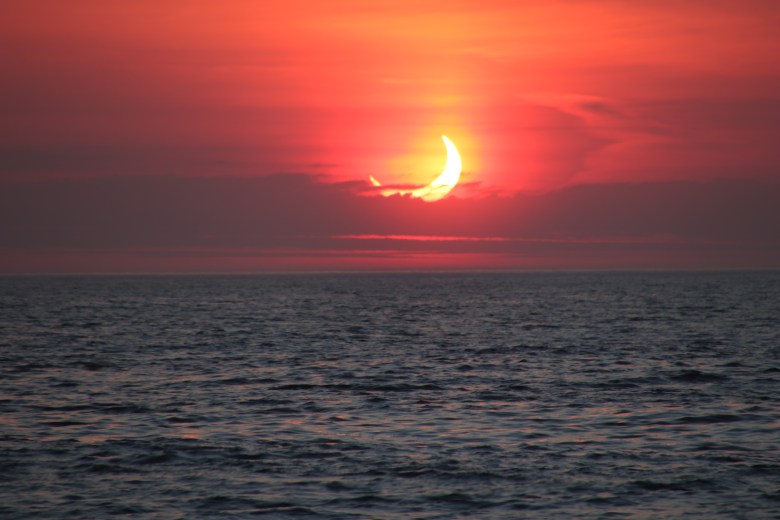
A few years later I got another chance to check out a partial solar eclipse. This time it was at Sun rise (read all about that in this post here). Again, I didn’t have a solar eclipse filter on my camera. However, I think they turned out much better this time. The one thing that I haven’t done either time was look directly at the sun without my solar eclipse glasses on.
DON”T LOOK DIRECTLY AT THE SUN WITHOUT SOLAR ECLIPSE GLASSES.

Sunglasses ARE NOT SAFE to use to look at the ECLIPSE. You will need Solar Eclipse glasses or solar viewers.
Just remember to never look at the sun without the proper eyewear.
No you can’t look through a telescope, binoculars, camera, or similar device with eclipse glasses on. Those devices need to have a special made filter to safely view the eclipse with.
Do you live in an area in the path of totality or are you planning on traveling to it? Did you witness the one in Oct 2023? Is this going to be your first solar eclipse or are you a seasoned veteran? Let us know in the comments down below.
Feel free to leave a comment with your favorite view tips or where you plan on watching the eclipse from. We can’t wait to hear from you.










 Kozmo Photos